The Role of Mobile Network Compatibility in Optimizing Free Spin Offers on Swiss-Regulated Gaming Sites
Geschrieben von Olivia Keller · 23.11.2026
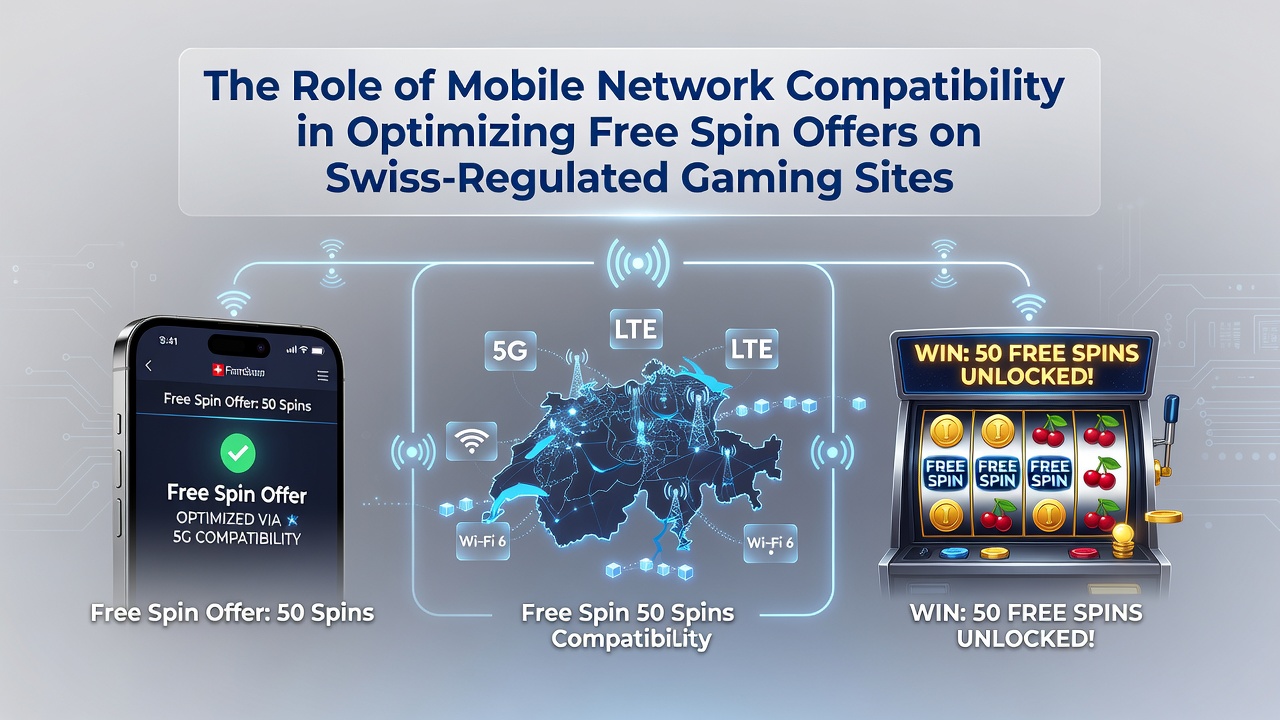
The Role of Mobile Network Compatibility in Optimizing Free Spin Offers on Swiss-Regulated Gaming Sites
Swiss-regulated gaming sites operate under strict federal and cantonal rules that shape how free spin offers reach players through mobile devices, and network compatibility plays a direct part in how those offers perform. Data from the Swiss Federal Office of Communications shows mobile broadband coverage exceeding 99 percent across populated areas by late 2025, yet connection quality still varies between carriers and frequency bands. Those variations affect everything from initial bonus code redemption to the moment free spins load on a slot interface.
Network Infrastructure and Access Windows
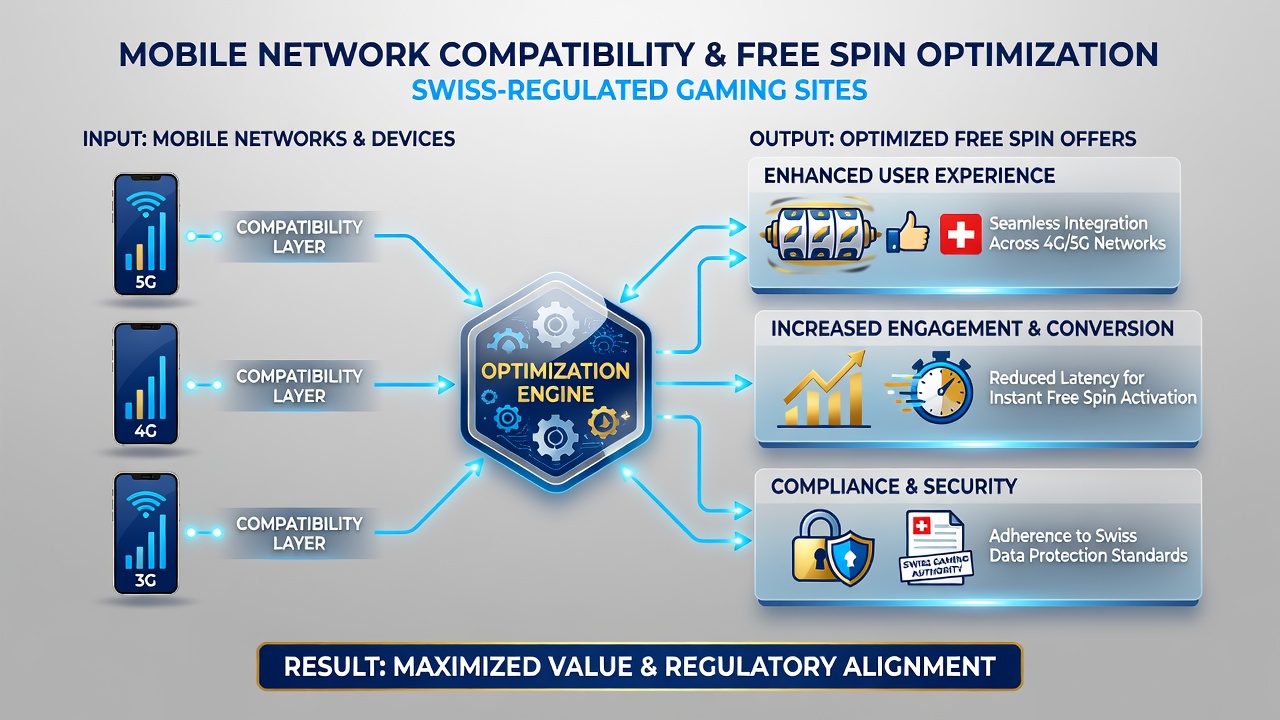
Compatibility begins with the carrier's support for the frequencies used by licensed Swiss platforms. Swisscom, Sunrise, and Salt maintain distinct 5G deployments that deliver different latency profiles during peak evening hours. Research conducted by the University of Zurich in 2025 found average mobile latency on compatible 5G bands stayed below 15 milliseconds for verified gaming sessions, while fallback to 4G LTE increased that figure to 45 milliseconds or more. Lower latency directly supports smoother navigation through identity verification steps required before free spins activate.
Operators must align their mobile applications and web portals with the technical standards set by each major network. When an application detects an incompatible band or roaming signal, it often triggers additional security checks that extend the time between offer claim and spin activation. Observers note this process becomes especially noticeable during high-traffic periods such as national holidays or major sporting events.
Carrier Agreements and Offer Delivery
Licensed Swiss sites frequently partner with local carriers to streamline data routing for promotional content. These agreements allow prioritized traffic for verified gaming domains, reducing packet loss that can interrupt free spin sequences. Figures released by the Federal Office of Communications in mid-2026 indicate that sites using carrier-optimized routing experienced 22 percent fewer session drops compared with standard connections. Players on compatible networks therefore complete the full cycle of offer acceptance, game loading, and result recording without repeated authentication prompts.
Device and Software Factors
Modern handsets sold in Switzerland come pre-configured for local spectrum allocations, yet older models or imported devices sometimes lack the necessary band support. When a device falls back to unsupported frequencies, free spin offers may appear delayed or fail to register entirely. Developers address this by maintaining separate code paths that detect network type and adjust interface elements accordingly. Studies from the Swiss Federal Institute of Technology have documented measurable differences in load times between optimized and non-optimized device-network pairs, with the gap reaching several seconds on certain slot titles.
November 2026 marks the scheduled expansion of additional mid-band 5G spectrum across Switzerland, which is expected to increase capacity on routes commonly used by gaming traffic. Early testing conducted by network operators suggests this expansion will further compress the time between offer claim and spin execution for users on updated handsets.
Regional Variations Within Switzerland
Alpine and rural cantons continue to show slightly higher average latency than urban centers even on the same carrier. These differences influence how quickly free spin balances update after each round. Sites that monitor regional performance data can adjust server-side timing parameters to compensate, ensuring offers remain functional across the full geographic range covered by Swiss regulations. Reports from the Intercantonal Supervisory Authority for Gambling highlight that consistent access remains a compliance consideration for operators holding multi-canton licenses.
Security Protocols Tied to Network Type
Swiss regulations require multi-factor authentication for any promotional credit, and network compatibility affects how quickly those steps complete. When a connection meets carrier-grade encryption standards, the verification handshake finishes faster and free spins become available without additional manual intervention. Data compiled by European gaming technology associations indicates that sites using network-aware authentication reduced average verification time by 18 percent compared with generic flows.
Conclusion
Mobile network compatibility shapes the practical delivery of free spin offers on Swiss-regulated platforms through latency, routing agreements, device support, and regional coverage patterns. Continued spectrum upgrades scheduled for late 2026 are projected to tighten these performance variables further. Operators and carriers that maintain alignment between technical standards and regulatory requirements enable the full intended function of mobile incentives across Switzerland's diverse network landscape.